Civic information
built to be used.
I AM America combines long-form civic research, community information, public participation tools, programs, events, and concept exploration inside one connected platform.
Take dense civic information and complicated system-level ideas, then design interfaces that let people actually follow the information from question to context to action.
One mission.
Multiple systems.
The design problem was bigger than building a collection of informational pages. Different parts of I AM America needed to behave differently while still feeling like one product.
Some pages read like investigations. Others behave like dashboards. Others guide the user toward meetings, projects, volunteer opportunities, or a proposed model. The information architecture had to support all of those modes without losing the brand.
Research & Issues
Long-form dossier pages organize complex subjects into readable arguments, evidence, questions, and visual data.
Civic Information Engine
City profiles turn scattered civic information into one structured interface covering government, budgets, meetings, projects, participation, and more.
Concept Exploration
The platform can move beyond documenting an issue and visually explore proposed models, systems, and alternatives.
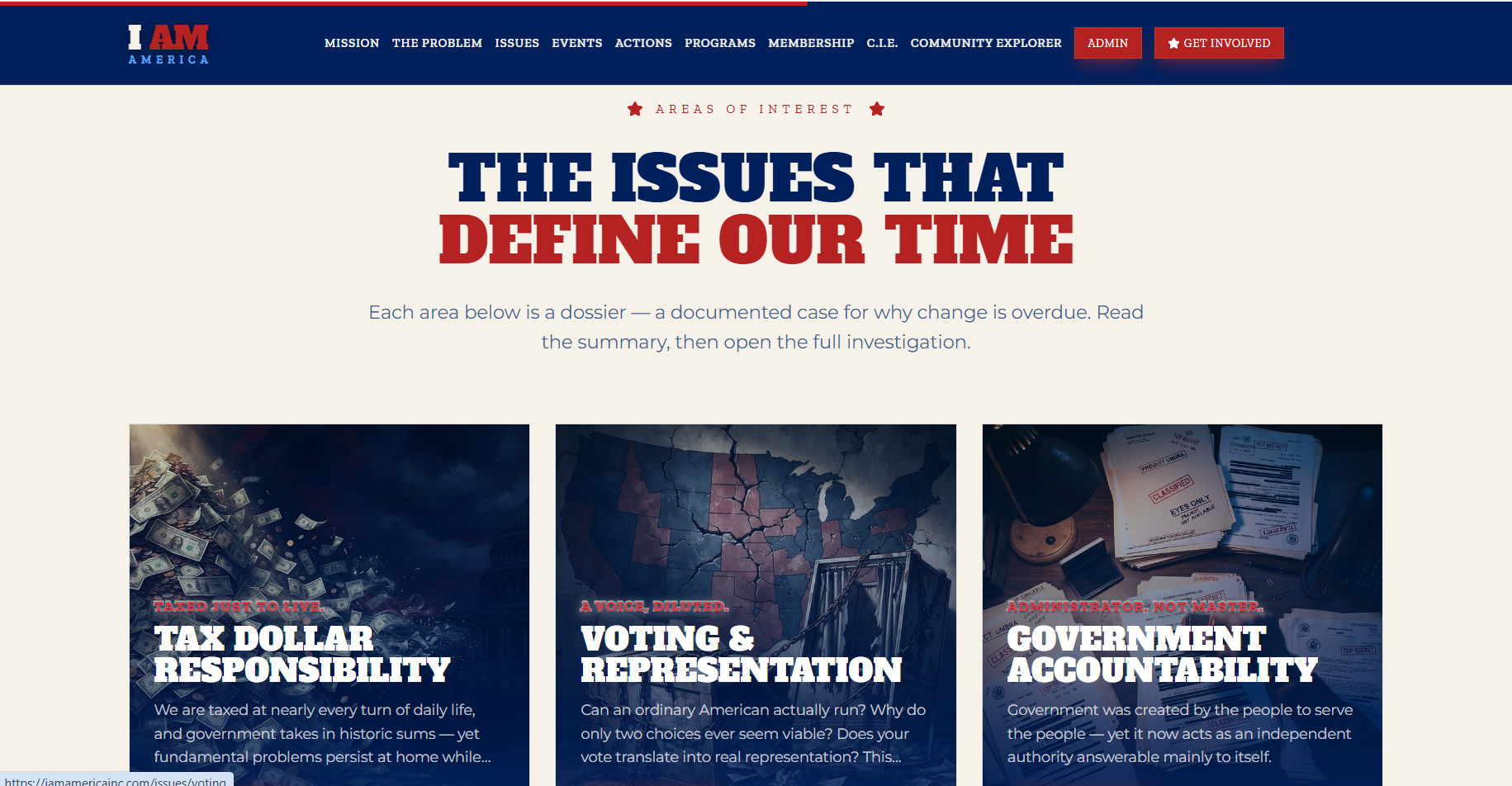
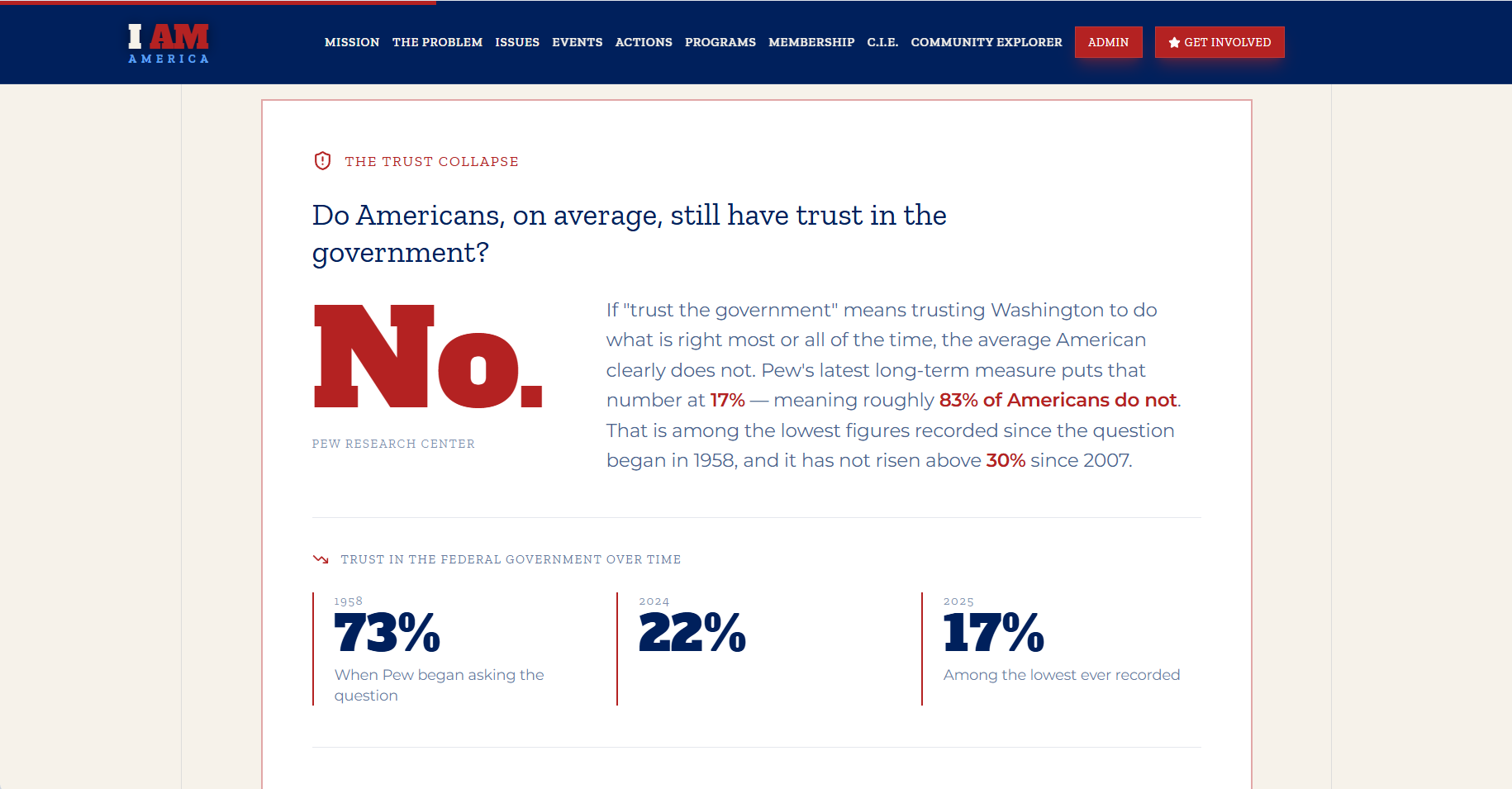
Issues become dossiers.
Rather than reducing a complex topic to a card or headline, the site gives an issue room to unfold: question, context, evidence, data, and deeper investigation.
Your city,
in one place.
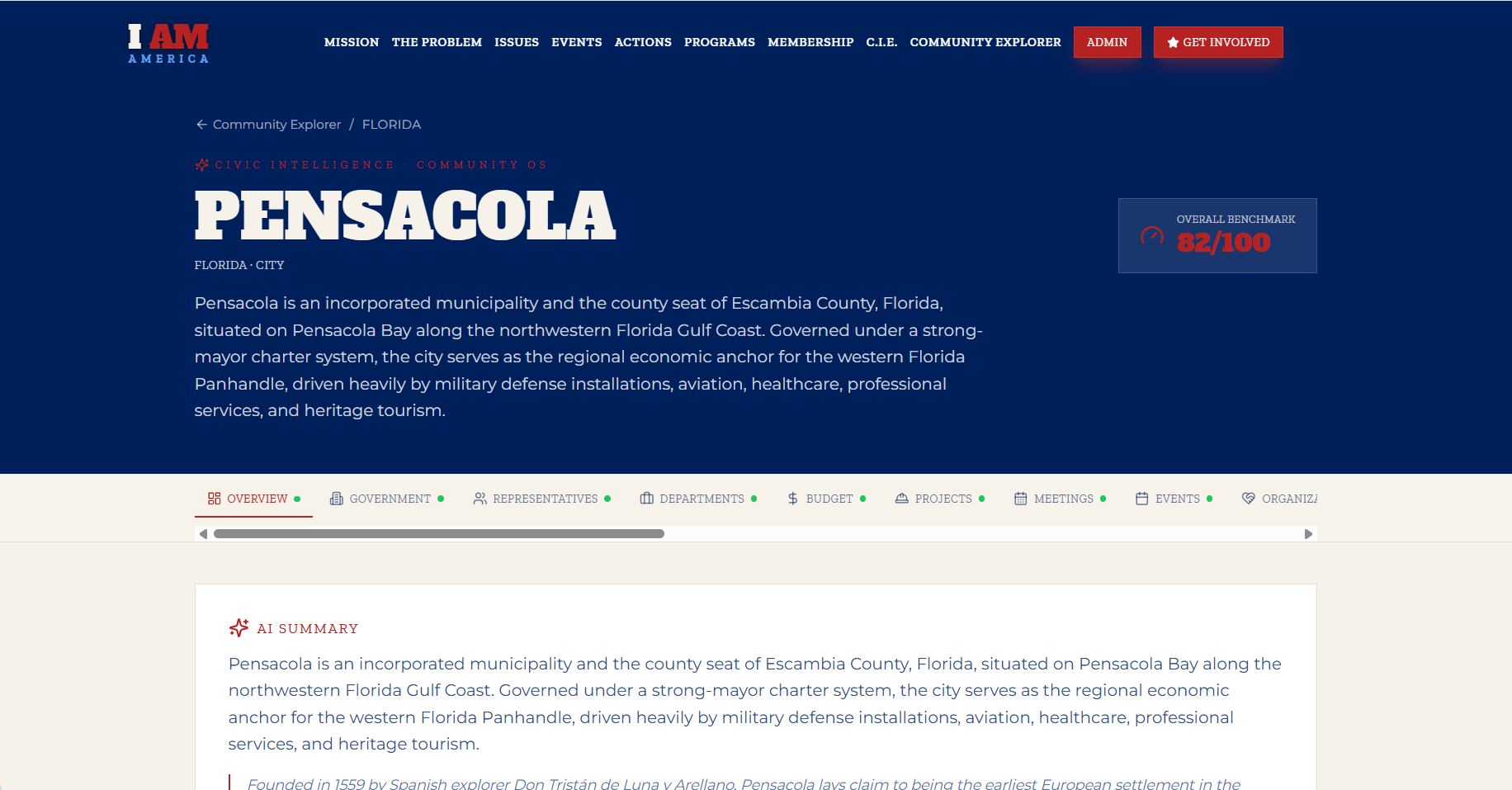
C.I.E. is the application layer inside the larger platform: a structured city profile that organizes civic information into one navigable system instead of forcing users to hunt across disconnected pages and sources.
Information has
somewhere to live.
The interface uses sections instead of one giant report, so users can move from broad context into the specific civic layer they care about.
Overview
Community summary, benchmark, quick facts, and orientation.
Government
Executive structure, council information, budget, debt, revenue, and expenditures.
Representatives
Local and other relevant representatives organized into one view.
Budget
Public spending translated into a visual allocation people can understand.
Projects
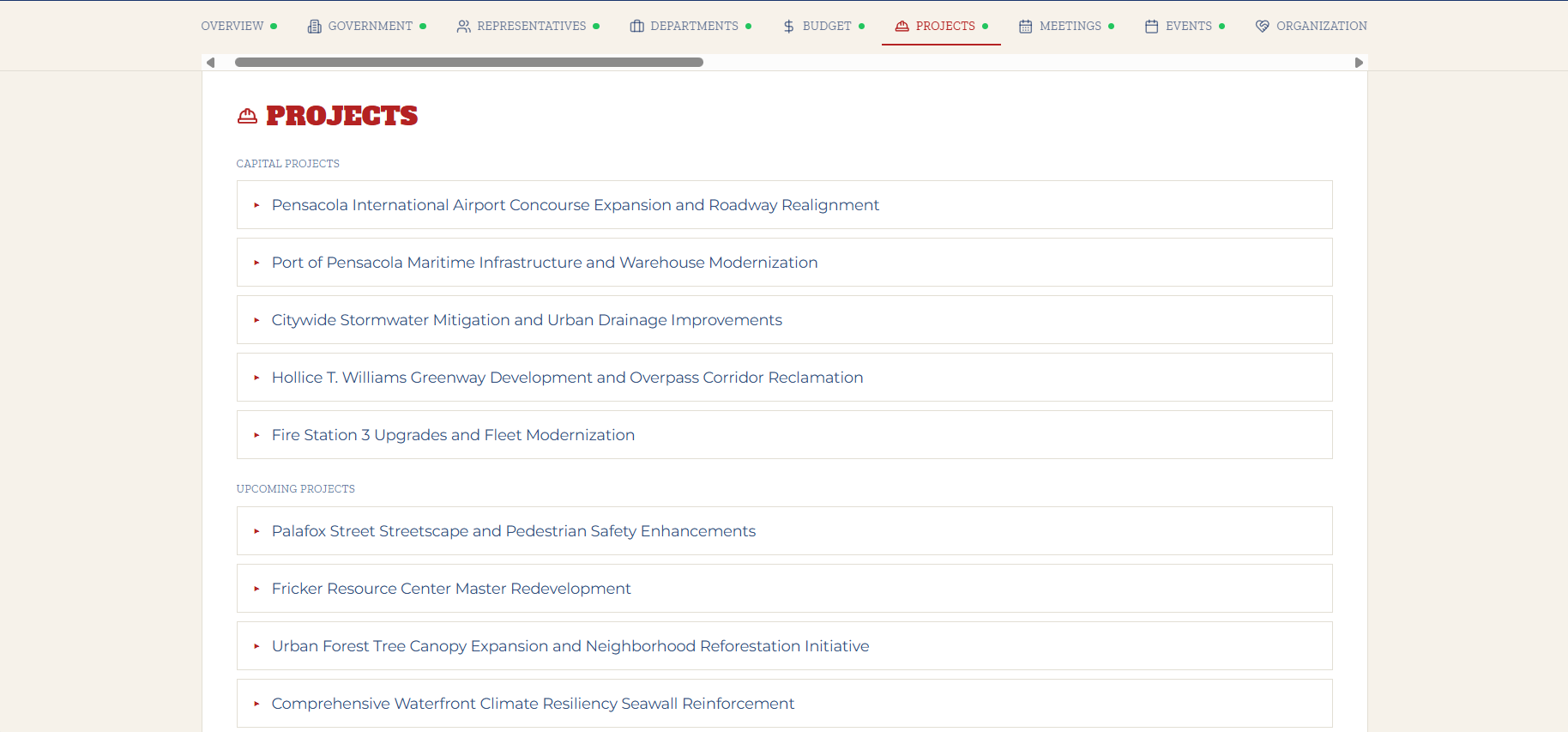
Current and upcoming public projects collected into a readable list.
Meetings
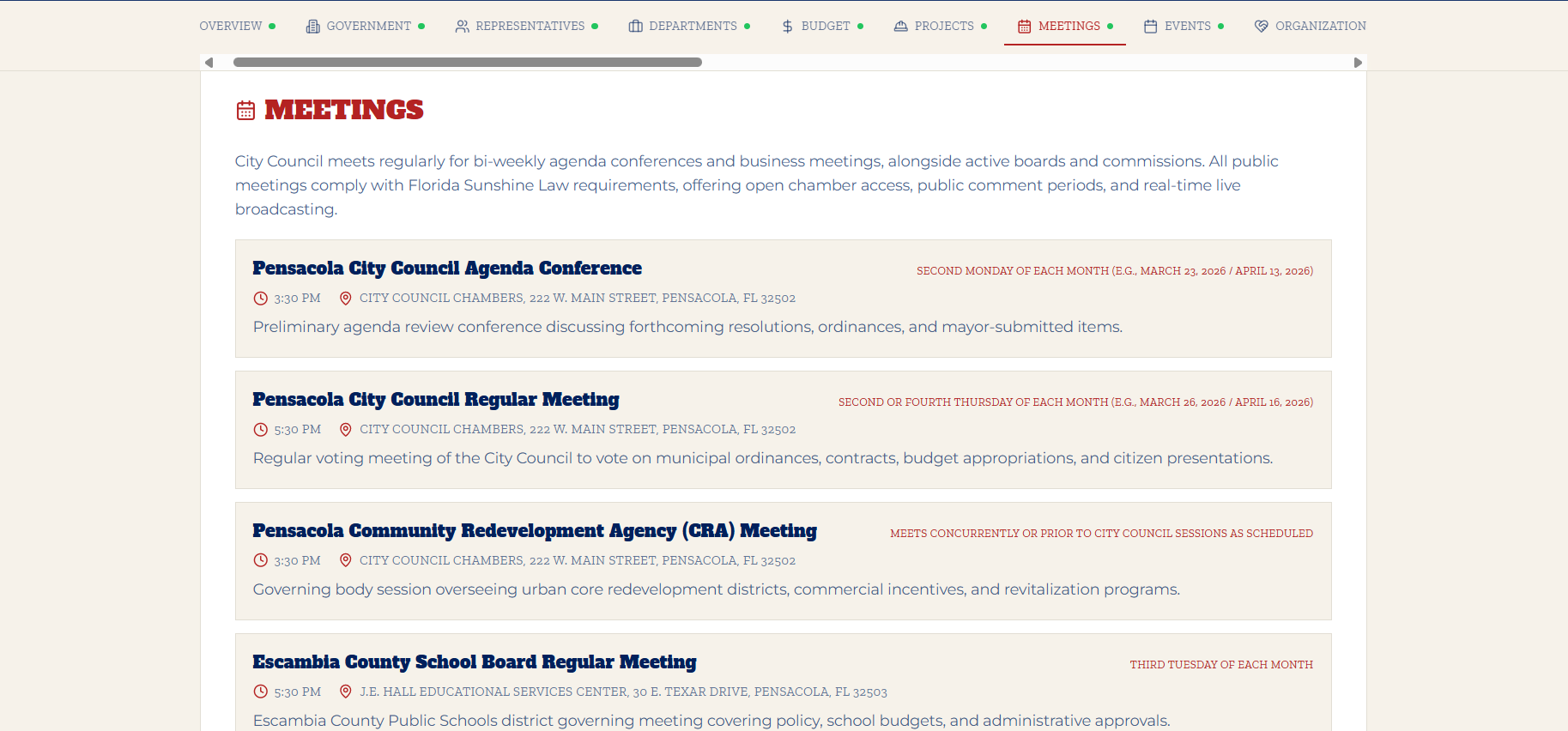
Meeting schedules, locations, descriptions, and participation context.
Volunteer
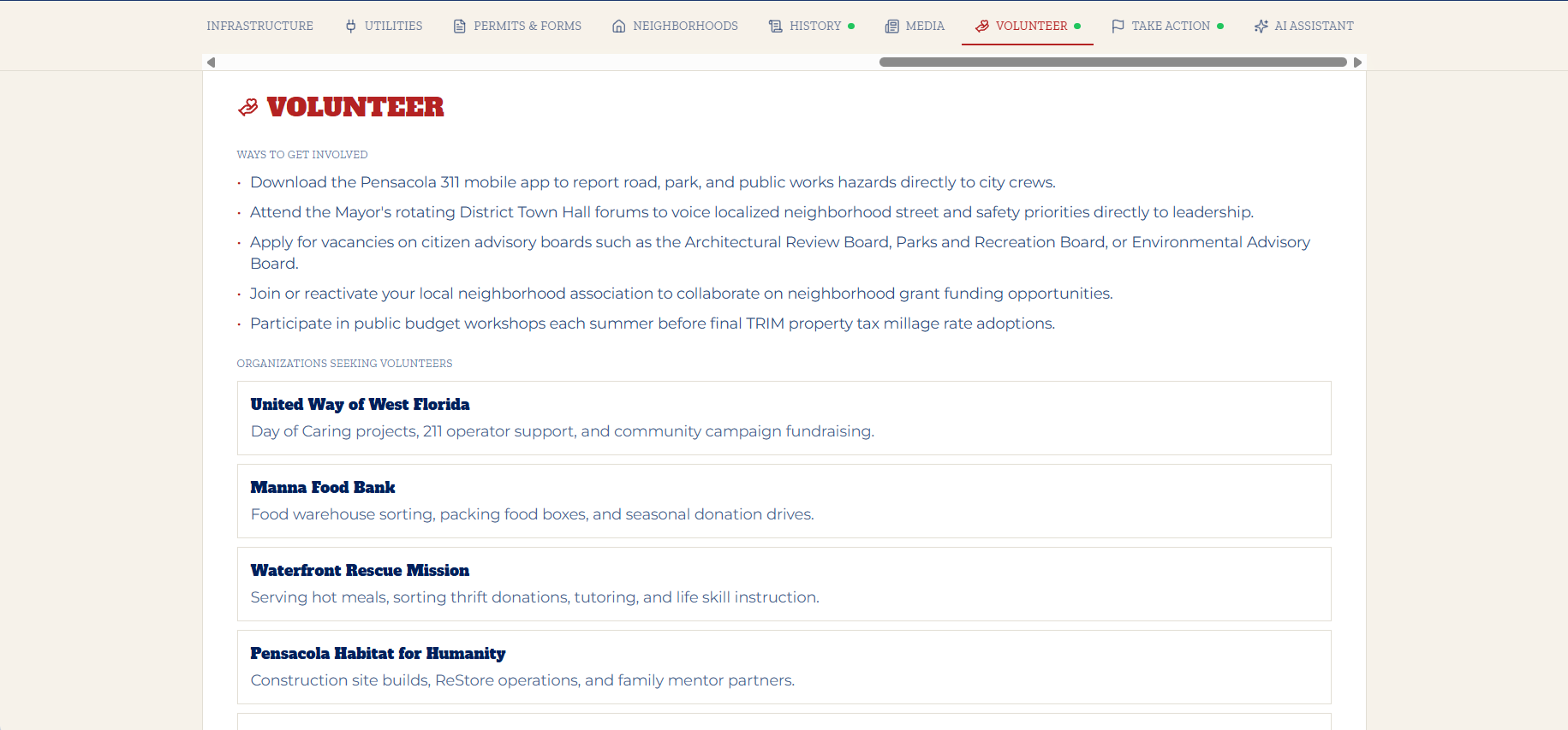
Ways to contribute through public and community organizations.
Take Action
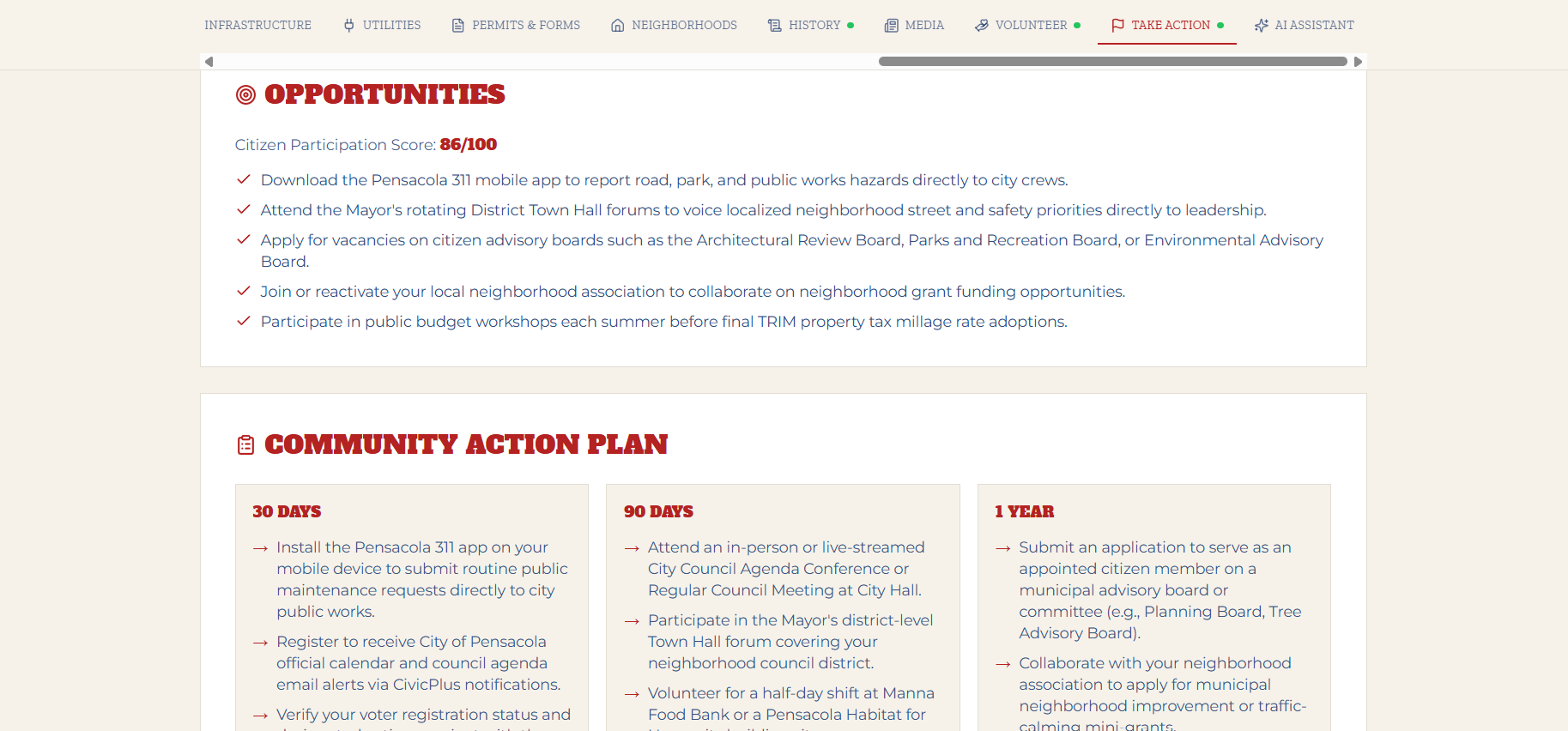
Concrete participation opportunities organized into an action plan.
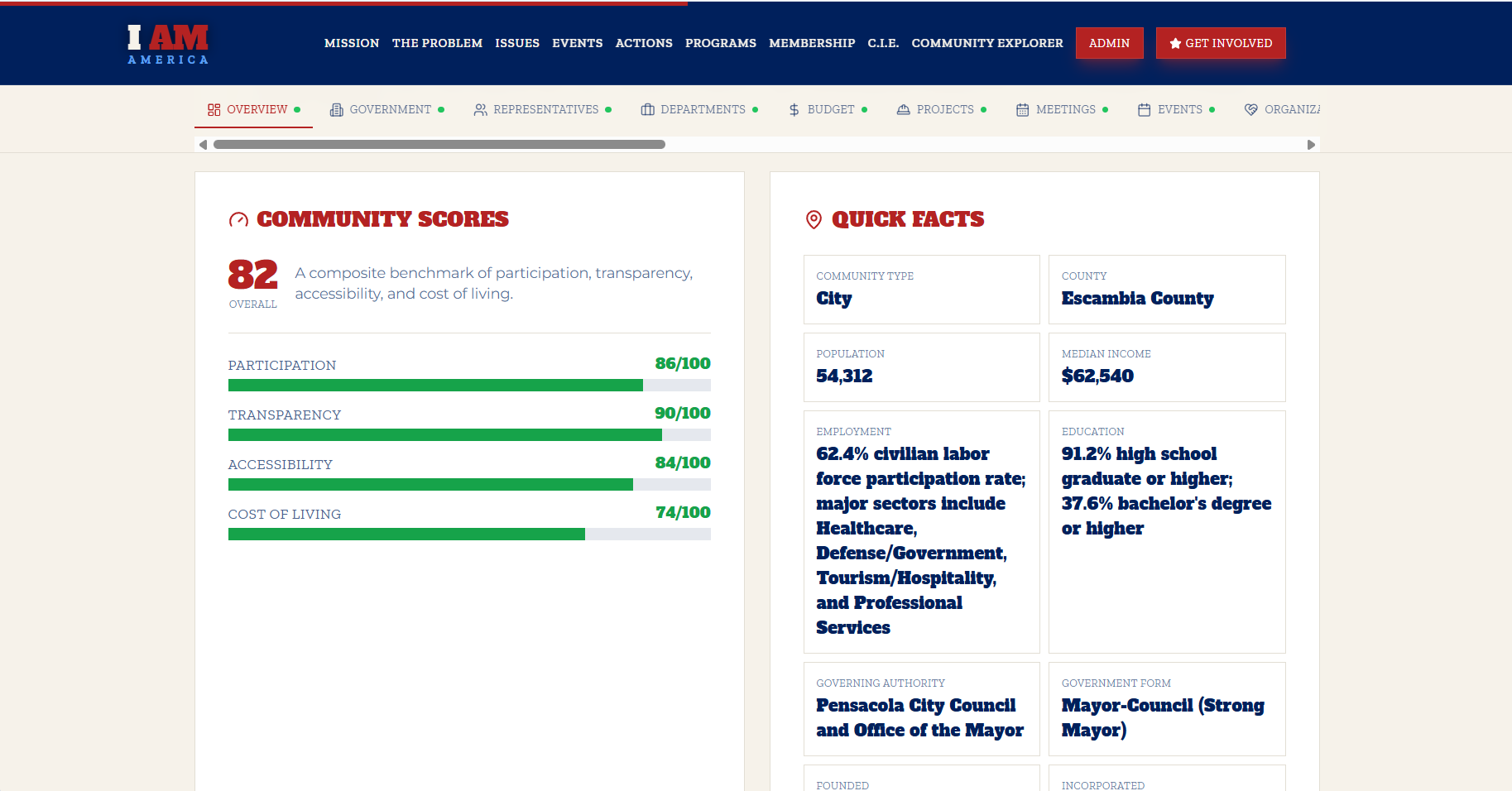
Orient the user first.
The city profile opens with a benchmark and quick facts before asking the user to explore deeper layers of local information.
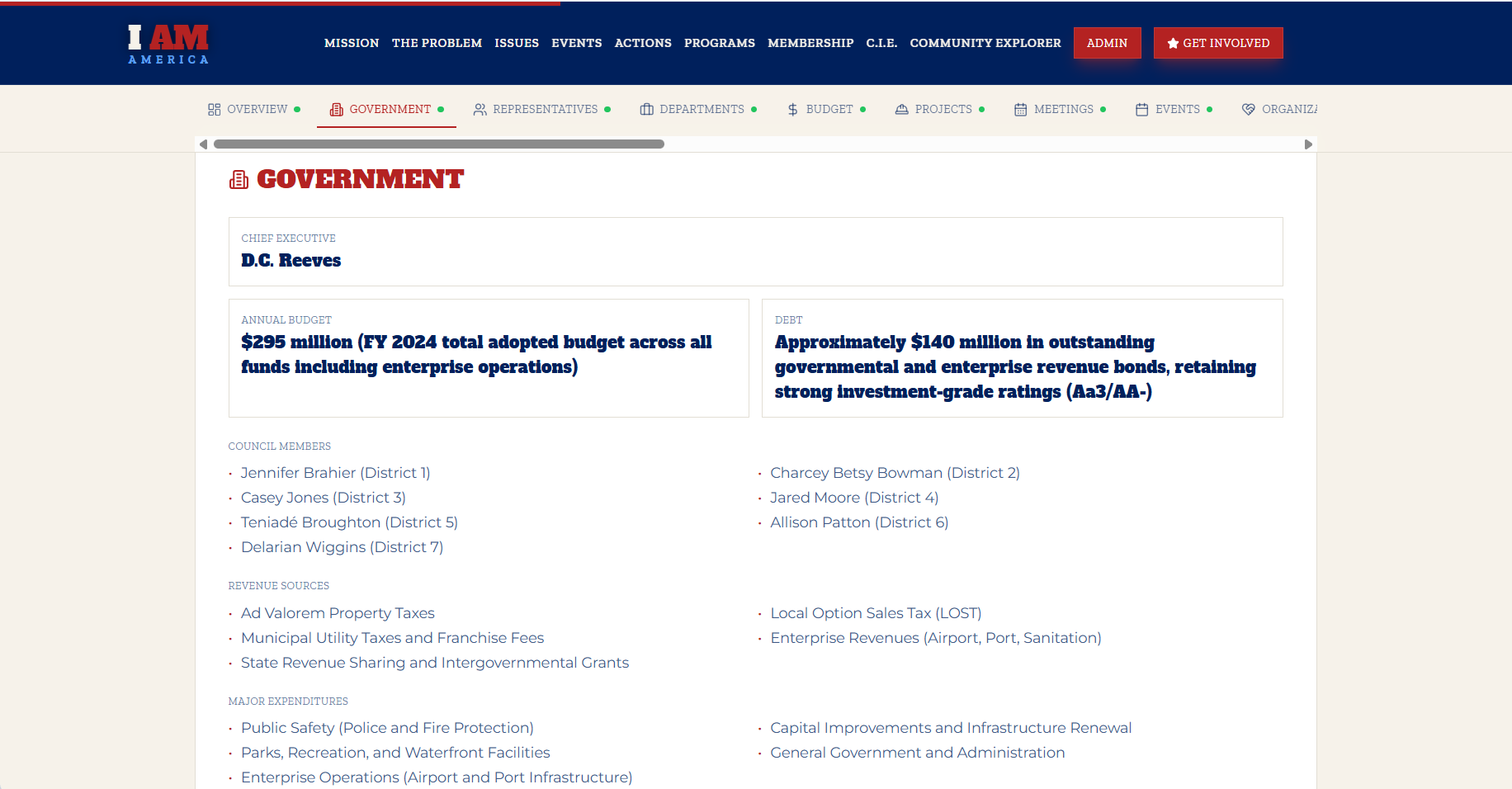
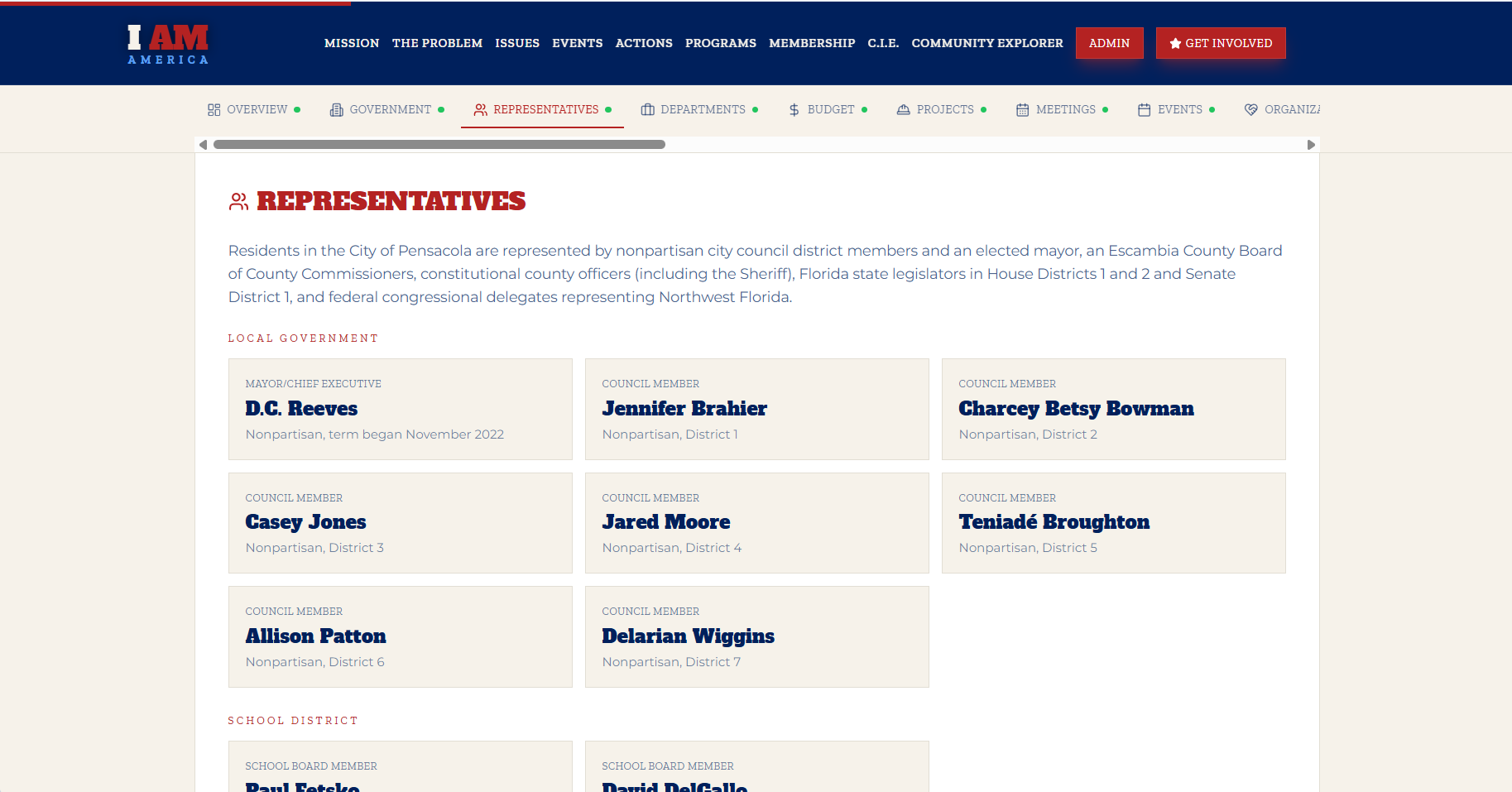
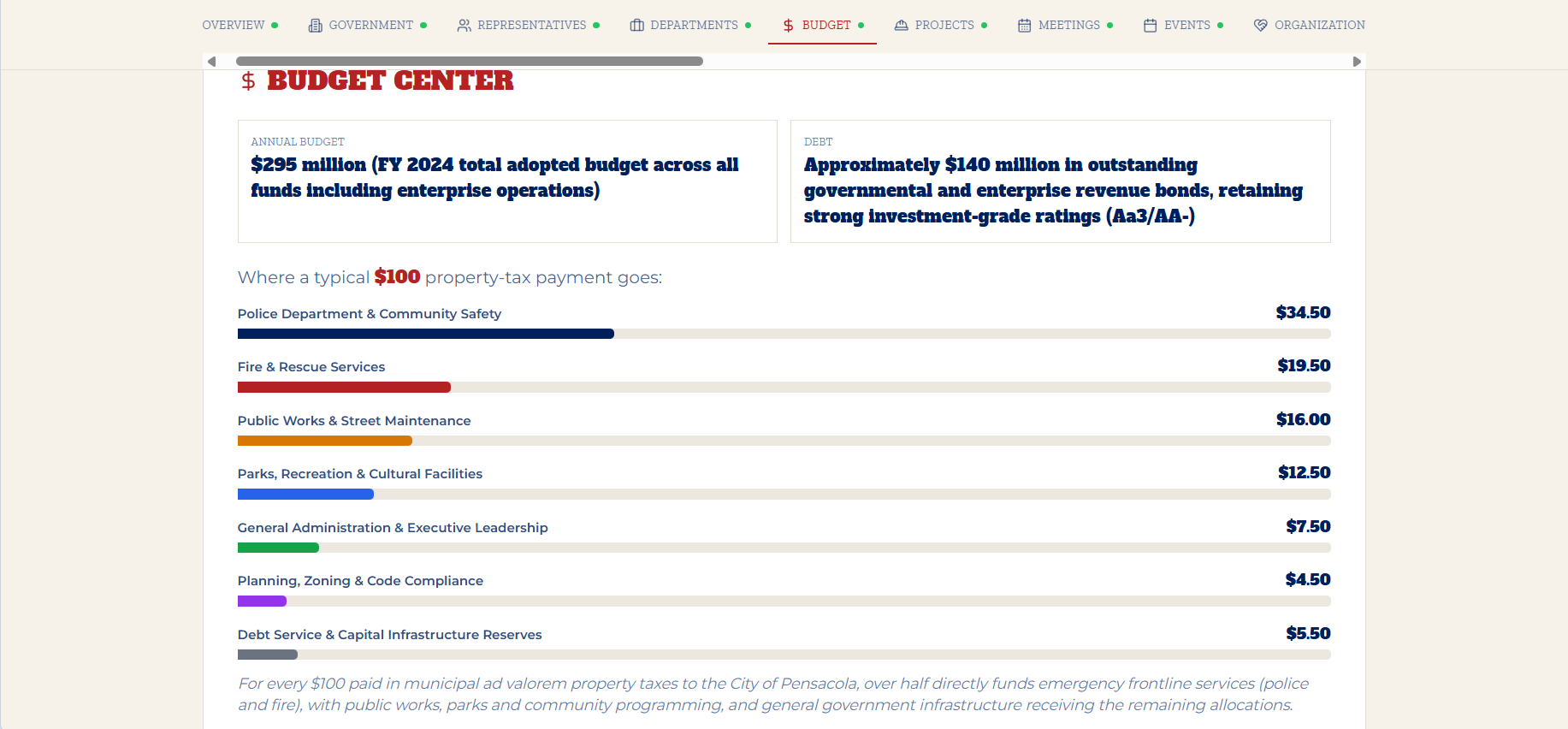
Don’t stop at
“here’s the data.”
The CIE continues beyond civic reference material into ways people can participate: volunteer opportunities, public meetings, local actions, and time-based community plans.
Citizens Currency
as a design system.
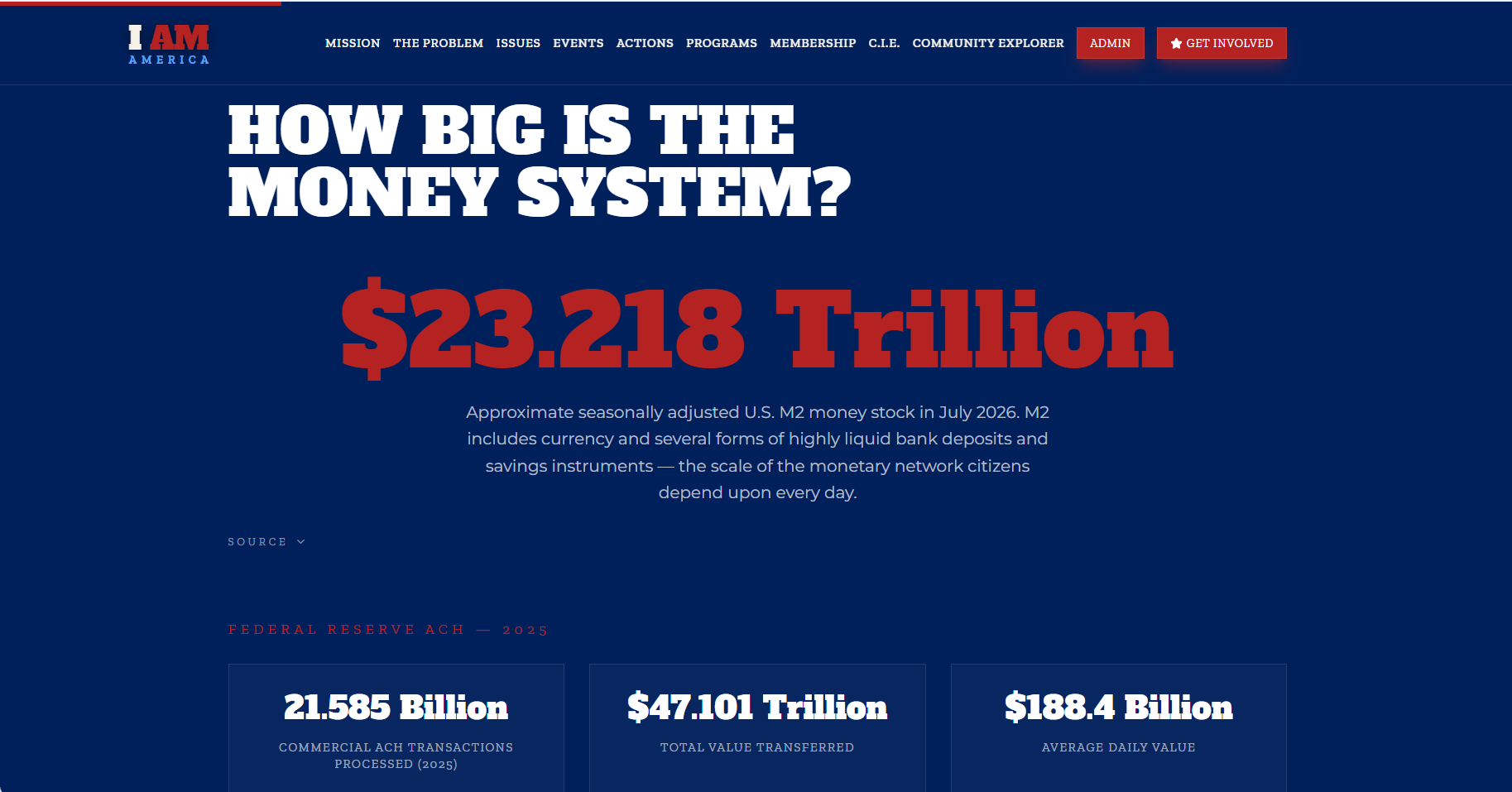
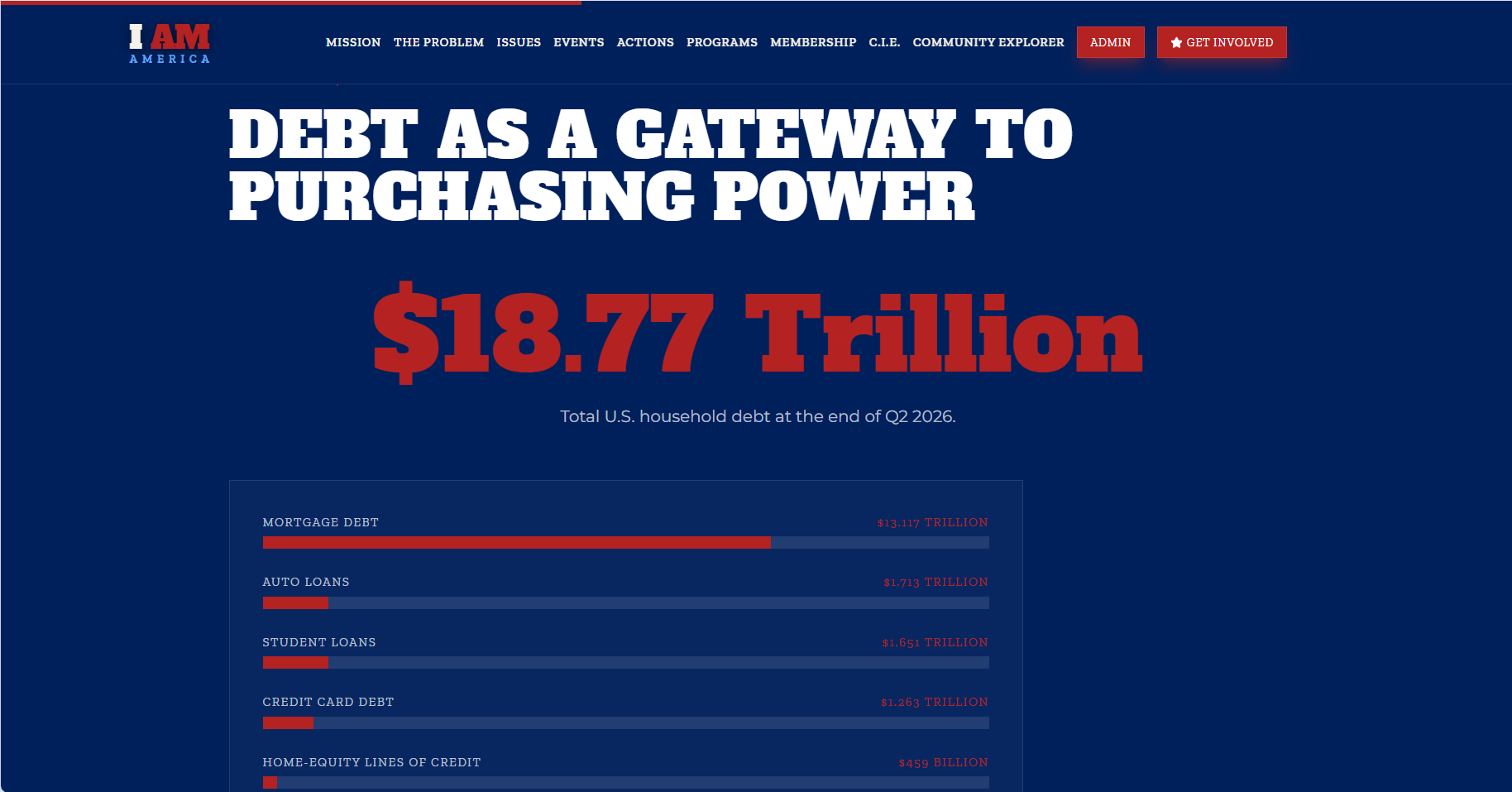
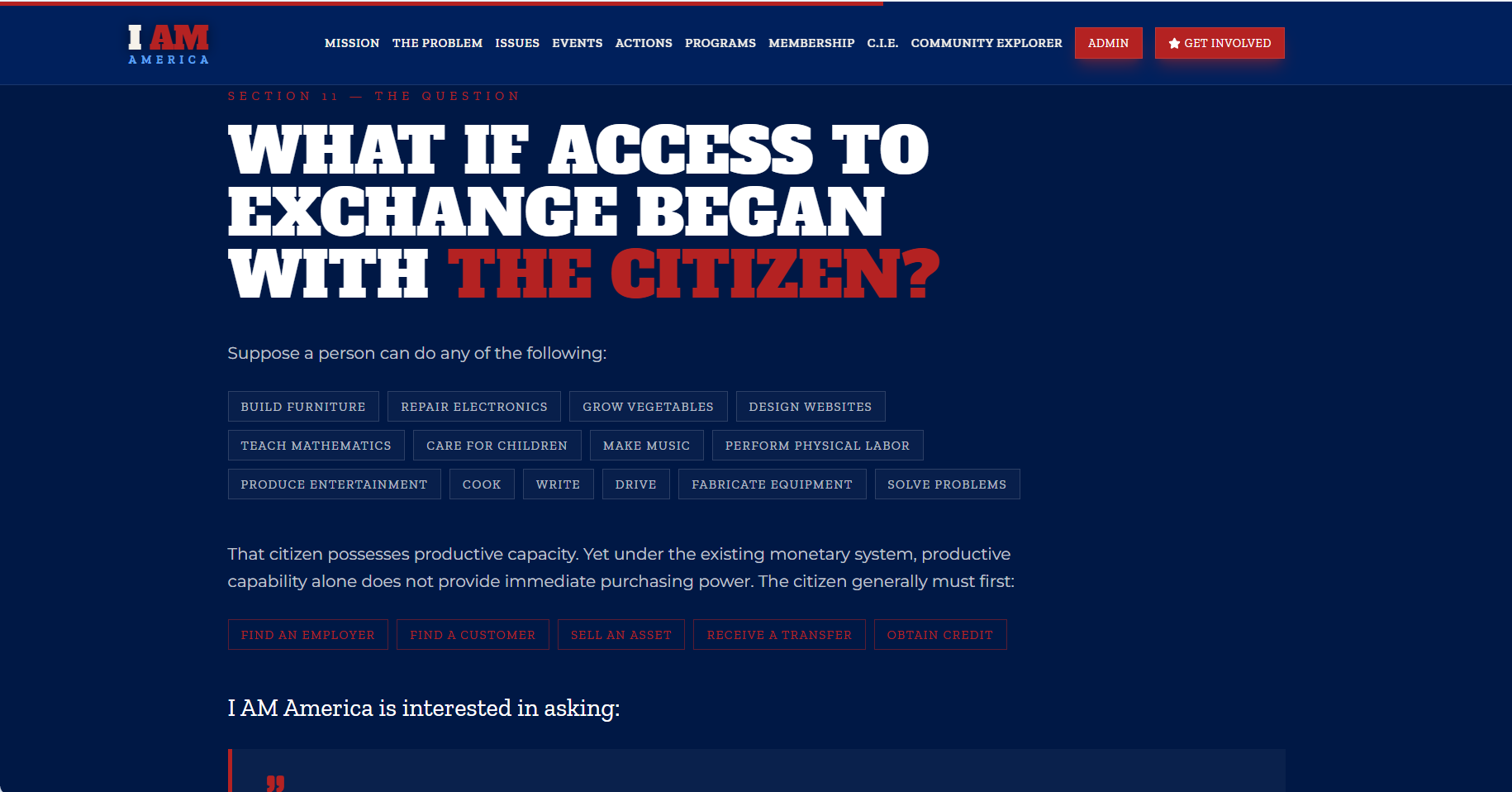
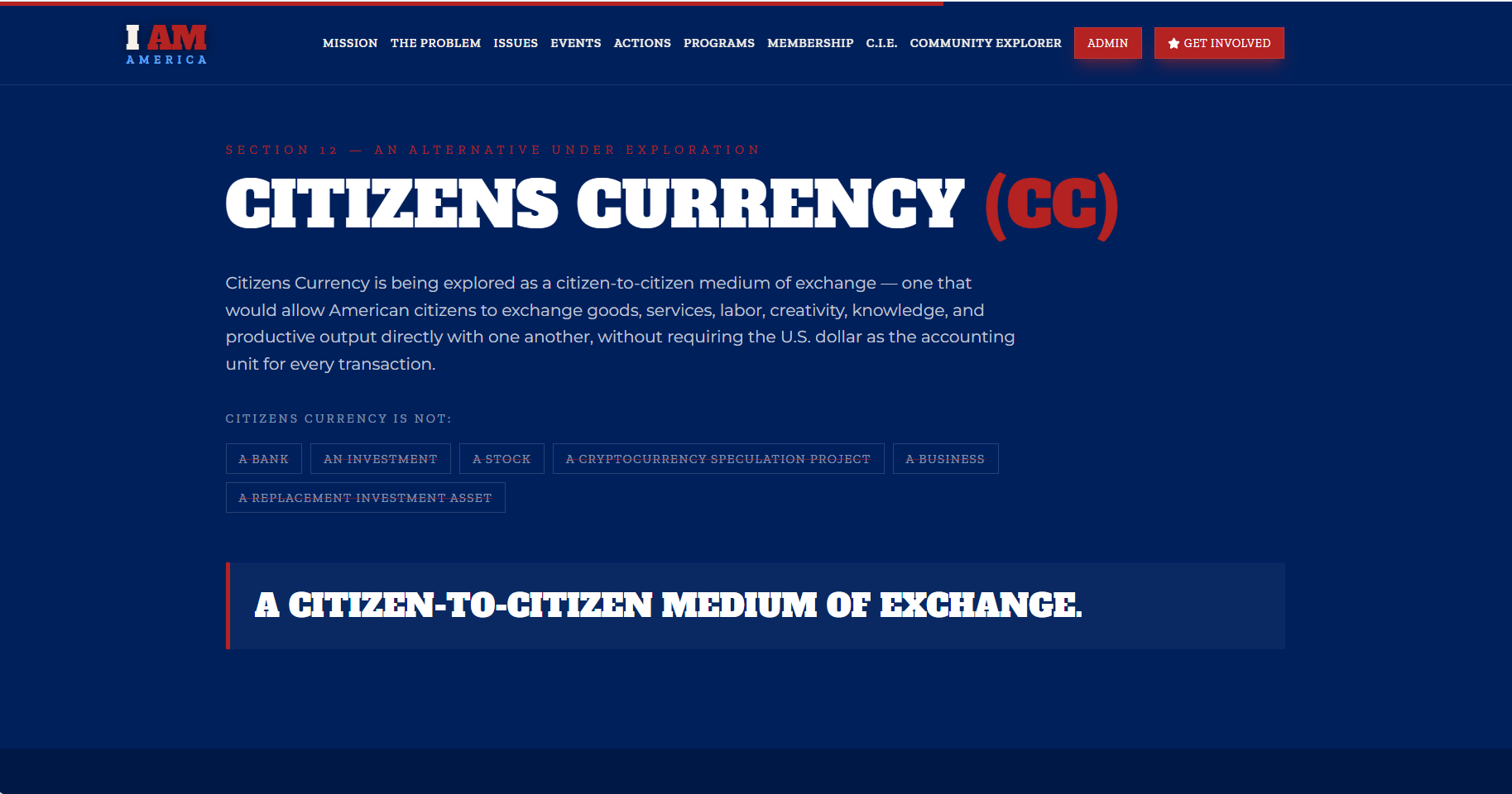
Citizens Currency is presented within I AM America as a concept under exploration. From a portfolio perspective, the challenge was to make a complex proposed exchange model understandable through sequence, comparison, numbers, and concrete examples.
Explain before asking people to imagine.
The concept appears only after the dossier has established the question and surrounding system, allowing the interface itself to carry part of the explanation.
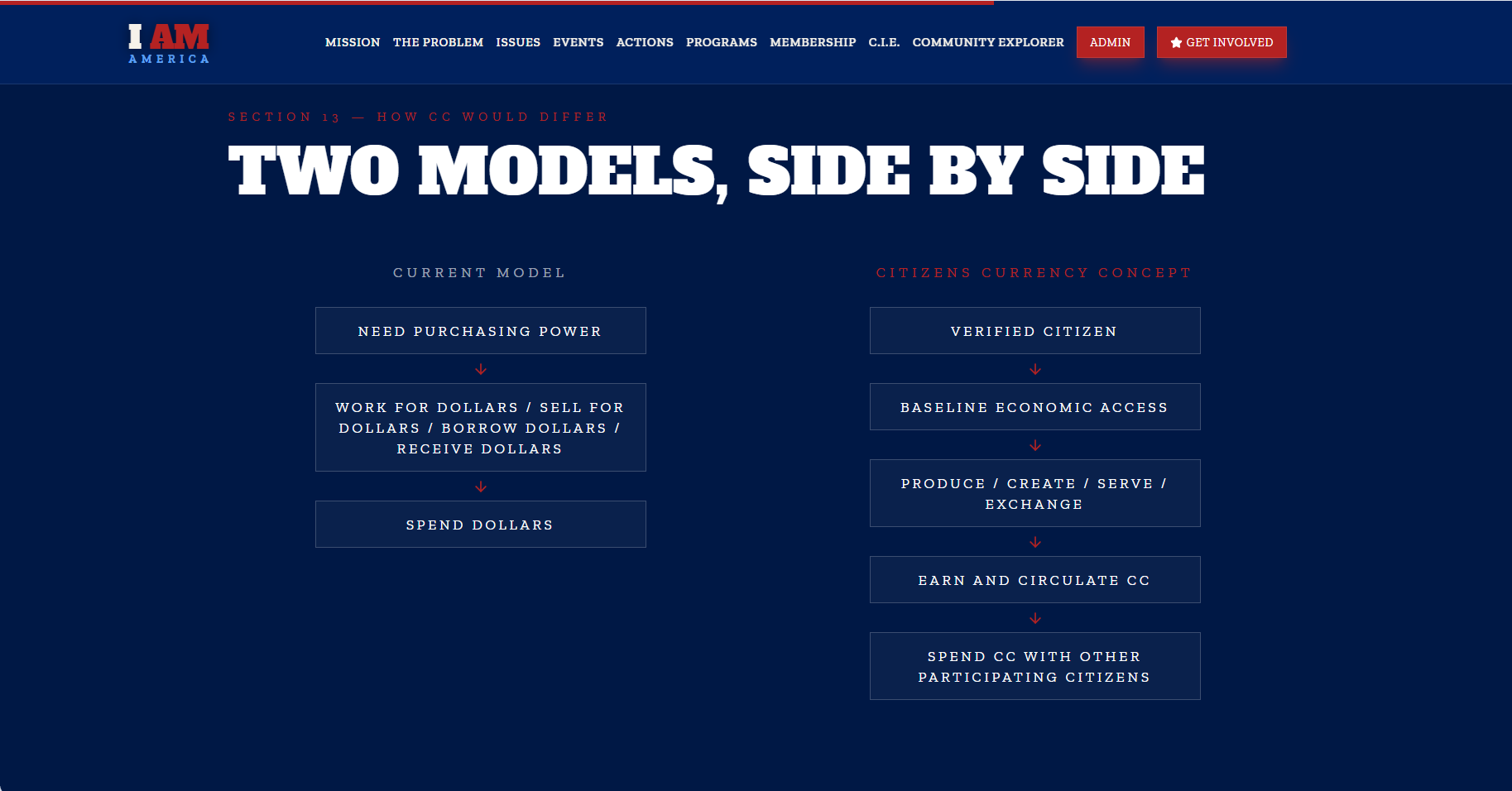
Put the models side by side.
Complex systems become easier to inspect when the user can follow each model visually instead of reading two long explanations back to back.
Define the Existing System
Start by visually explaining the system being examined before introducing a different model.
Ask the Design Question
Use the interface to move from data and context into a clearly framed conceptual question.
Introduce the Concept
Present Citizens Currency as an exploratory model rather than dropping users into unexplained mechanics.
Compare the Models
Place the current model and proposed concept side by side so users can understand how the structures differ.
Make It Concrete
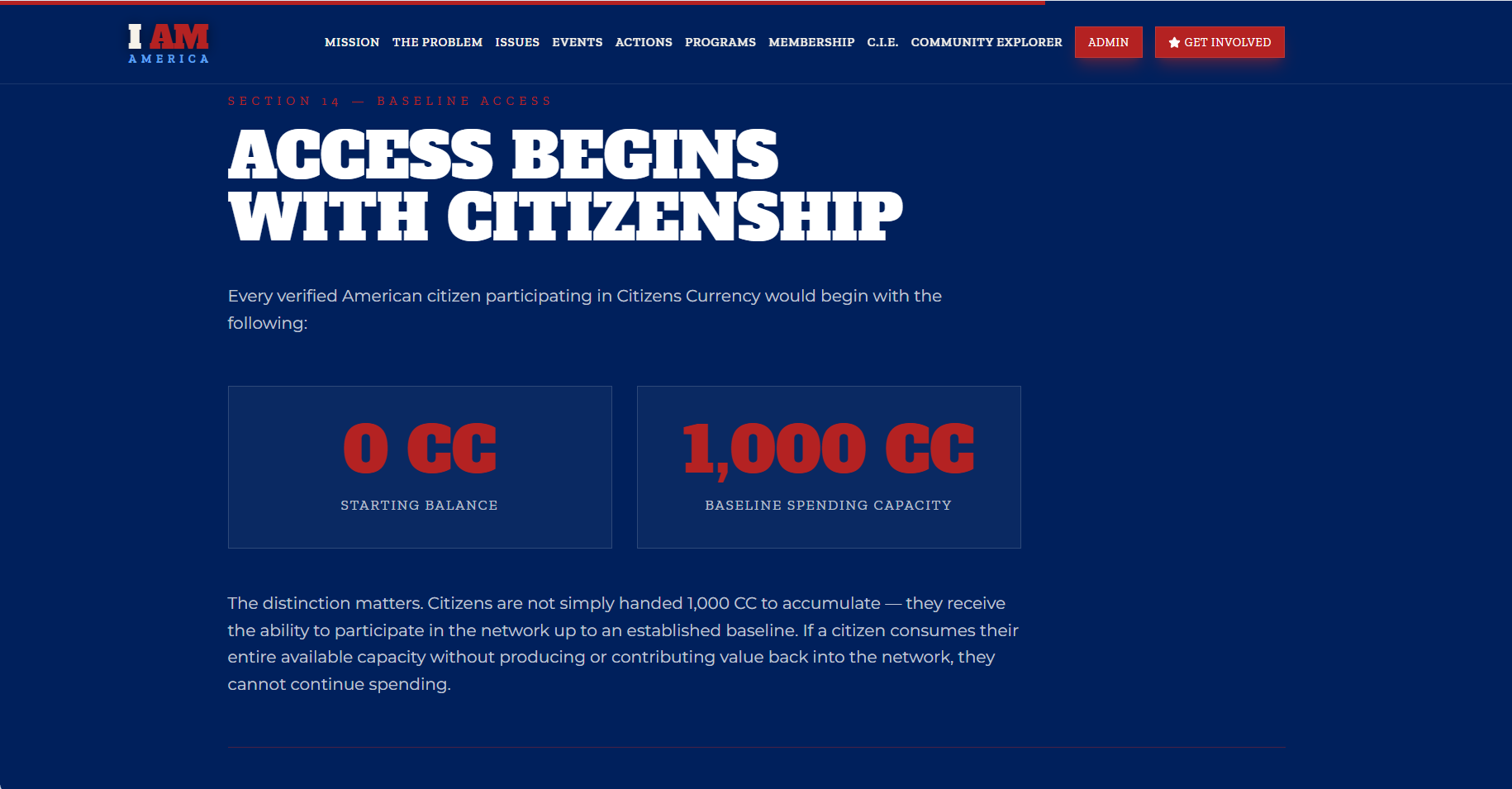
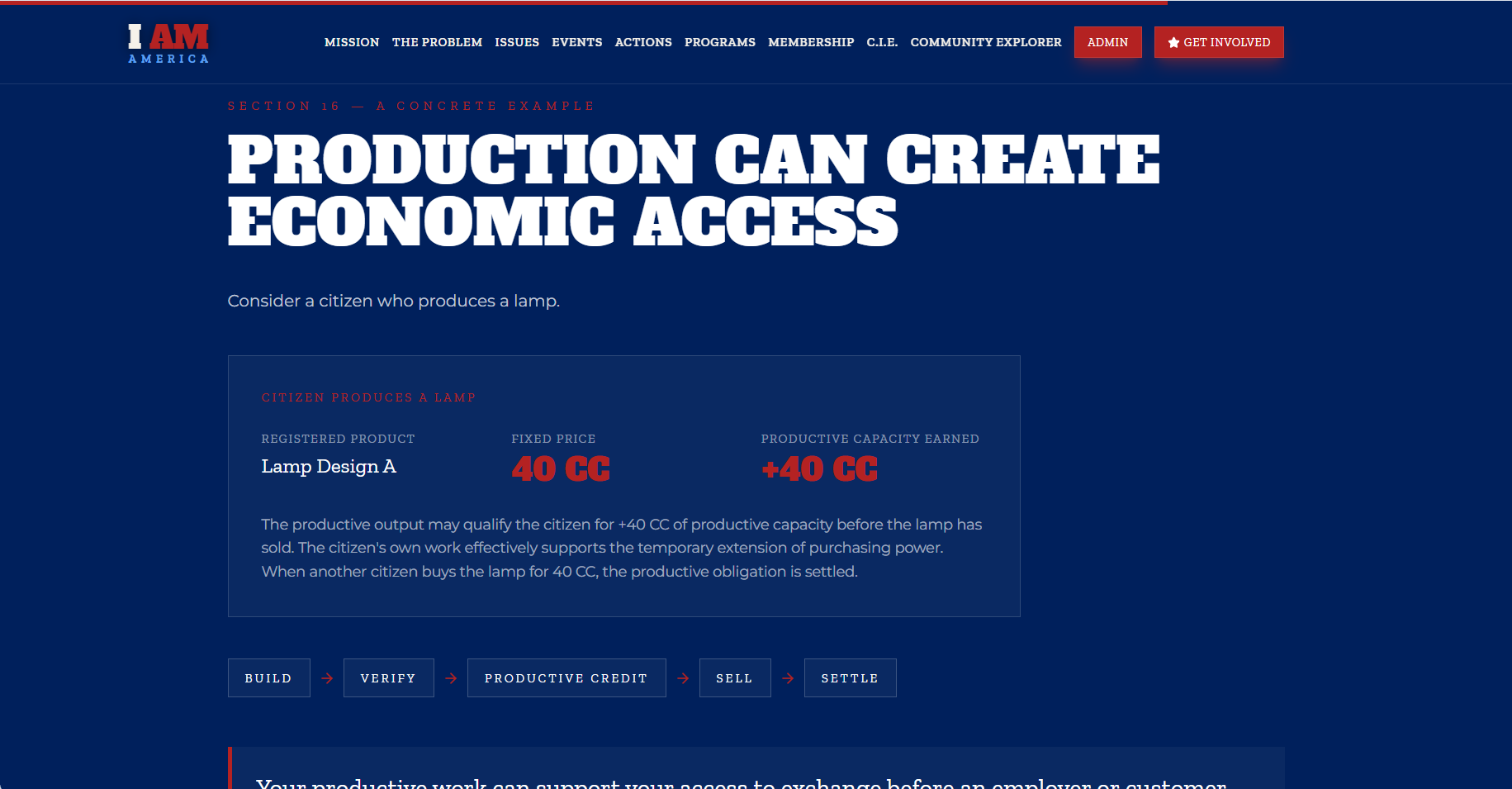
Translate the concept into examples that show how a hypothetical transaction or productive act could work.
Show the model doing something.
The later sections move away from theory and use a simple production example to demonstrate how the hypothetical rules interact with one another.
Information architecture
is part of the product.
I AM America pushed the project beyond page design. Research pages, city profiles, public participation tools, long-form explanations, and proposed-system diagrams all needed different interaction patterns without feeling like separate products.
The result is a platform where the structure of the information changes according to what the user is trying to understand or do.